

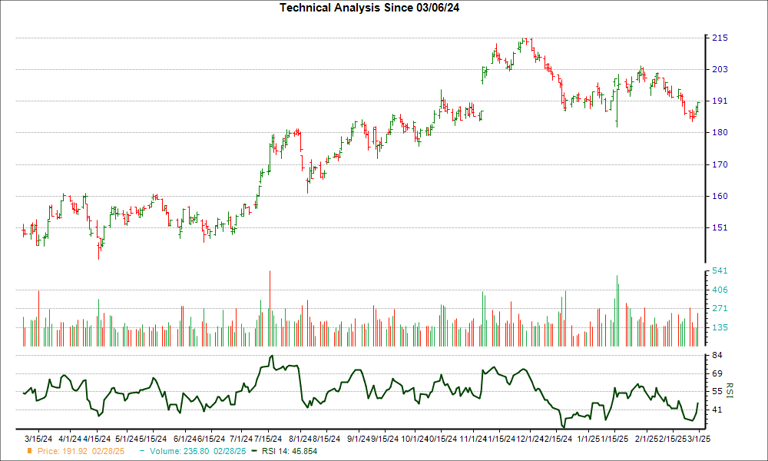
The PNC Financial Services Group, Inc., commonly known as PNC, is one of the largest diversified financial services institutions in the United States. Its stock price is a significant indicator for investors interested in the banking and financial sector. In this article, we will explore the various aspects related to the PNC stock price.If you wish to track the PNC Financial Services Group, Inc. (The) stock price PNC stock price. you can visit Bitget’s stock price page to view the latest stock price information and trends. This page can also serve as a reference for your buying and selling decisions.
Historical Performance of PNC Stock Price
Over the past few decades, the PNC stock price has shown a mixed yet overall upward trend, with fluctuations corresponding to major economic events. For instance, during the 2008 financial crisis, the stock price took a severe hit, dropping significantly as the banking industry faced widespread turmoil. However, in the subsequent recovery period, PNC, through strategic actions such as acquisitions and prudent management, managed to regain lost ground. In recent years, the stock has shown relative stability, with moderate growth and occasional dips due to market volatility and interest – rate changes. Examining historical price charts can help investors identify long – term trends and patterns, which are valuable for making informed investment decisions.
Factors Influencing PNC Stock Price
Several factors play a crucial role in determining the PNC stock price. Macroeconomic factors are at the forefront. Interest rates set by the Federal Reserve have a direct impact on PNC’s profitability. When interest rates rise, the bank can earn more on its loans, potentially leading to an increase in the stock price. Conversely, falling interest rates may squeeze profit margins. The overall economic health, including GDP growth, unemployment rates, and inflation, also affects the demand for PNC’s financial services. Additionally, company – specific factors such as earnings reports, new product launches, and management decisions can cause significant movements in the stock price. For example, if PNC reports better – than – expected earnings, investors’ confidence typically increases, driving up the stock price.
Comparison with Industry Peers
Comparing PNC’s stock price with its industry peers provides valuable insights. When compared to other large – scale banks like JPMorgan Chase and Bank of America, PNC’s performance can be evaluated in terms of relative valuation, growth rates, and profitability ratios. Sometimes, PNC may outperform its peers due to its unique business strategies or a stronger presence in certain markets. For example, if PNC has a more diversified loan portfolio or a better – performing regional market, it may command a higher stock price compared to some of its competitors. On the other hand, it may also underperform if faced with regulatory challenges or slower – than – expected growth in key business segments.
Future Outlook for PNC Stock Price
The future outlook for the PNC stock price depends on a multitude of factors. On the positive side, if the economy continues to grow steadily and interest rates remain at a reasonable level, PNC could see further expansion of its business and an increase in its stock price. The bank’s ongoing digital transformation efforts may also enhance its competitiveness and attract more customers, potentially driving up earnings. However, there are also risks. Regulatory changes in the financial sector could increase compliance costs and limit business opportunities. Moreover, a potential economic downturn could lead to higher loan defaults and a decrease in the demand for financial services, negatively impacting the stock price. Overall, investors need to closely monitor both internal and external factors to assess the future movement of PNC’s stock price.
